Fibreglass vs Concrete Pools: Which is Right for South East Queensland?
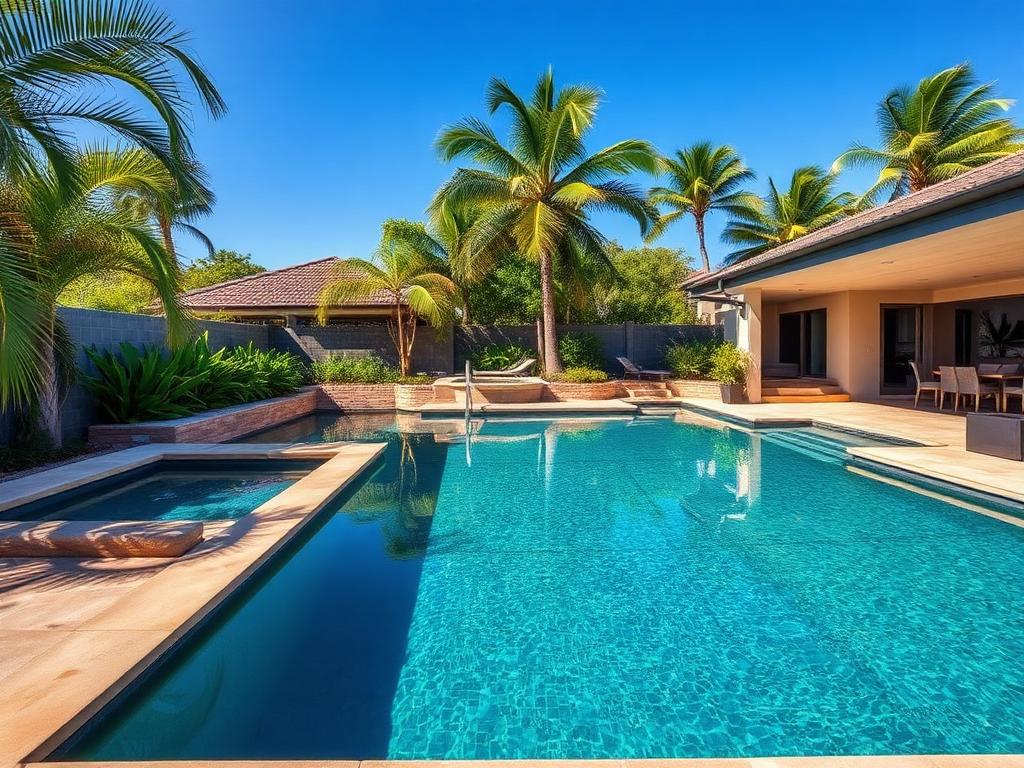
Fibreglass or concrete? It's the single most common question South East Queensland homeowners ask when they start planning a pool. Both are proven, long-lasting options, both are built every day across Brisbane, the Gold Coast, the Sunshine Coast and Logan — but they suit very different blocks, budgets and lifestyles. This guide gives you a straight, builder's-eye comparison so you can walk into your quote conversation knowing exactly what you're choosing between.
Quick Comparison Table
| Factor | Fibreglass | Concrete |
|---|---|---|
| Starting price (installed) | From $56,000 | From $54,000 |
| Installation time | From 4 weeks | Approx. 3 months (12–16 weeks) |
| Maintenance | Low | Higher — acid wash, resurface |
| Customisation | Wide range of moulded shapes | Fully custom — any shape or size |
| Lifespan | 25+ years | 50+ years with upkeep |
Fibreglass Pools — Pros and Cons
Fibreglass pools arrive as a pre-moulded shell, manufactured in a controlled factory environment and delivered to your site ready to drop in. For the majority of suburban Queensland blocks, this is now the default choice — and for good reason.
Fibreglass Pros
- Far faster installation: The shell itself is installed in 1–2 weeks. Full handover including paving, fencing and equipment is typically 4–6 weeks, compared with months for concrete.
- Lower long-term maintenance costs: The gelcoat surface is non-porous, so it doesn't harbour algae the way concrete does. Chemical usage is meaningfully lower over the life of the pool.
- Smooth, non-porous surface: Comfortable underfoot, easier to clean, and resists the staining and biofilm that plague concrete in humid SEQ summers.
- No resurfacing required: A quality fibreglass shell never needs the $10,000–$20,000 resurface cycle that concrete pools face every 10–15 years.
- Better suited to Queensland UV and heat: Modern colour-stable gelcoats carry long manufacturer warranties specifically tested for Australian conditions, and the shell flexes slightly with reactive clay soils common across SEQ.
- Plenty of shapes and sizes: Lap pools, plunge pools, family pools, freeform — there's a moulded shape for almost every brief, up to roughly 11–12m long.
Fibreglass Cons
- Limited customisation: You're choosing from a manufacturer's range rather than designing from scratch. Most clients find a shape they love; a small number don't.
- Higher upfront cost than the cheapest concrete options: Bargain-basement concrete builds can come in under fibreglass, but they rarely include the same inclusions or finish quality.
- Site preparation matters: The hole has to be cut accurately and the base prepared correctly. Poor soil and tight access need proper engineering — something an experienced installer will scope before quoting.
Concrete Pools — Pros and Cons
Concrete (often shotcrete or sprayed concrete) is poured and shaped on site. It's the right answer when a fibreglass shell simply can't deliver what the block or the brief demands.
Concrete Pros
- Fully custom shape and size: Any length, depth, edge profile or feature — infinity edges, beach entries, wet edges, integrated spas, unusual geometries. If you can draw it, it can be built.
- Can be built on difficult sites: Steep slopes, tight access, suspended structures and split-level designs are all achievable in concrete where a moulded shell isn't viable.
- Long lifespan with maintenance: A well-built and well-maintained concrete pool will comfortably last 50 years or more.
Concrete Cons
- Longer build time: Expect approximately 3 months (12–16 weeks) from break-ground to swim. Excavation, steel, shotcrete, cure, tile or render, plumbing and commissioning all take real time.
- Higher ongoing maintenance: Porous surfaces hold algae, which means more brushing, more chemicals, periodic acid washing, and resurfacing every 10–15 years.
- Higher chemical and running costs: Most owners spend noticeably more per year on chlorine, acid and stabiliser compared with a fibreglass pool of the same size.
- Rougher surface: Tiled and pebble finishes can be hard on feet and swimwear, particularly for kids.
- More expensive to heat: Concrete absorbs and loses heat more readily than fibreglass, so heating bills run higher across the cooler months.
Which Is Better for South East Queensland?
South East Queensland has a few characteristics that genuinely affect this decision. Summers are long, humid and UV-intense. Water restrictions return periodically. Most families swim from September through to May, and many heat their pools to swim year-round. Block sizes vary wildly — from compact Brisbane inner-city courtyards to large Gold Coast and Sunshine Coast acreages.
For the majority of standard suburban builds across Brisbane, Logan, Ipswich, the Gold Coast and the Sunshine Coast, fibreglass is the more practical choice. Faster install means less disruption, the non-porous surface handles our humidity better, water and chemical use are lower (which matters in restricted years), and the lifetime cost is usually thousands less.
Concrete genuinely wins when the brief calls for a shape no manufacturer makes, when the block is steep or awkward, when you want a wet-edge or vanishing-edge pool overlooking a view, or when the home is high-end and the pool is part of an architectural statement.
Cost Comparison — Real SEQ Pricing
Based on what we actually quote and build across SEQ in 2026:
- Fibreglass pools: from $56,000 fully installed, including standard excavation, plumbing, equipment, basic coping and handover.
- Concrete pools: from $54,000 fully installed for a straightforward build with tiled waterline and standard equipment.
- Most common customer budget: $65,000–$75,000, which buys a well-specified family-sized pool in either material with quality inclusions, paving allowance and pool fencing.
10-Year Running Cost Comparison
Running costs are where the two materials really separate. Across a typical 10-year period for an average family pool in SEQ:
- Fibreglass: roughly $800–$1,200 per year in chemicals, plus normal electricity for pump and any heating — around $8,000–$12,000 over a decade, with no resurfacing needed.
- Concrete: roughly $1,400–$2,000 per year in chemicals, plus acid washing every 3–5 years ($500–$1,000 each) and a resurface bill of $10,000–$20,000 somewhere in years 10–15 — comfortably $25,000+ over a decade.
Over 10 years, a fibreglass pool typically costs around $15,000–$20,000 less to own than an equivalent concrete pool, even before you factor in heating.
Frequently Asked Questions
How long does a fibreglass pool take to install in Brisbane?
The pool shell itself is craned in and set within 1–2 weeks of excavation. Full project handover — including plumbing, equipment, coping, paving and pool fencing certification — typically takes 4–6 weeks across Brisbane, subject to council inspections and weather.
Do fibreglass pools fade in Queensland's sun?
Modern colour-stable gelcoats from reputable manufacturers are specifically formulated for Australian UV and carry long warranties (often 25–35 years on the shell and colour). Older or lower-grade shells from a decade ago could fade, but today's quality fibreglass holds its colour very well in SEQ conditions.
Can I get a custom shape with a fibreglass pool?
Not in the same way as concrete — fibreglass shells come in a manufacturer's range of shapes and sizes. That said, the range is now extensive (lap, plunge, freeform, rectangular, infinity-style) and most clients find a shape that suits their block. If you need a truly bespoke shape, concrete is the right call.
What's the cheapest pool to run long-term in Queensland?
Fibreglass, comfortably. Lower chemical use, no resurfacing cycle, better heat retention and less time spent brushing and cleaning all add up. Over a 10–15 year horizon, fibreglass is the most economical pool to own in SEQ for the vast majority of households.
Not sure which pool type suits your block and budget?
Talk to the team at QLD Pool Installs — we build both fibreglass and concrete pools across South East Queensland and will give you an honest recommendation based on your site, brief and budget.
Get an Honest Recommendation